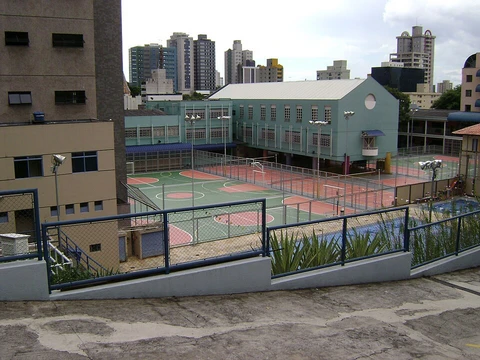
Roller skating
A recreational activity and sport with fluctuating popularity since the 18th century.
Roller skating means moving across a surface on roller skates. People do it for fun, as a competitive sport, or to get from place to place. While roller rinks and skate parks are built specifically for it, skaters also use streets, sidewalks, and bike paths.
The activity began as a performance art in the 1700s. It first became widely popular in the 1880s. In the United States, roller skating saw huge popularity from the 1930s through the 1950s, and then again in the 1970s, when it became linked to disco music and roller discos. The 1990s brought a surge in inline outdoor skating. Throughout its history, roller skating has held particular significance in Black and LGBT communities.
Competitive roller skating includes speed skating, roller hockey, roller derby, figure skating, and aggressive inline skating.
The earliest known roller skates came from 18th-century Europe. They were used in theater and musical performances, likely to mimic ice skating on stage. Early skates could only move in a straight line, making turns or curves very difficult. For a time, they were just occasional stage props. That changed in the 1840s.
In an 1840s Berlin beer hall, waitresses used roller skates to serve customers. Ballet and opera productions in the late 1840s, like *Le prophète*, also featured roller skating. This sparked the first wave of popularity in 1850s Europe. Key improvements—rubber wheels in 1859 and four-wheeled turning skates in 1863—helped the activity spread. Since then, roller skating’s popularity has risen and fallen sharply, often called a "craze" at its peaks.
From 1880 to 1910, roller skating boomed. Skates were mass-produced, and skating in rinks became popular with the general public across Europe, North and South America, and Australia. Specialized forms like figure skating and speed skating emerged during this time.
After a lull, roller skating became widespread again from the 1930s to the 1950s, a period known as the Golden Age of Roller Skating. Many rinks with electric organ music were built across the United States. In the 1970s, roller disco took off, a style rooted in disco music and pioneered mainly by Black and gay skaters. The late 1980s and 1990s saw the rise of indoor and outdoor inline skating, often called "rollerblading." Popularity dropped in the early 2000s but rebounded during the COVID-19 pandemic.
Roller skating has long been tied to Black American social movements, immigrant communities, and the LGBT community—especially women in roller derby. As a hobby, it is seen as playful and is widely accessible.
The first recorded use of roller skates was in a 1743 London stage performance, though the inventor is unknown. In 1760, John Joseph Merlin created the first recorded skate invention: a primitive inline skate with small metal wheels. Roller skates appeared on a Berlin ballet stage in 1818. The first patented roller skate design came in 1819 from France’s M. Petitbled. These early inline skates were hard to maneuver, mostly limited to straight lines or wide, sweeping turns.
Inventors kept refining the design through the rest of the 1800s. In 1823, Robert John Tyers of London patented the Rolito, a skate with five wheels in a single row under a shoe or boot. The first public skating rinks opened in 1857 at The Strand in London and the Floral Hall. In 1863, James Leonard Plimpton of New York City designed the four-wheeled turning skate, or quad skate, with two side-by-side pairs of wheels. A rubber cushion allowed a pivoting action, letting skaters turn by leaning. This was a huge success. The first public rinks using this design opened in 1866—first in Plimpton’s New York furniture store, then in Newport, Rhode Island. The quad skate dominated the industry for over a century.
In 1875, a rink in Plymouth, England, held its first roller skating competition. The following year, William Brown of Birmingham, England, patented a wheel design that kept the two bearing surfaces of an axle apart. He worked with Joseph Henry Hughes, who patented a ball or roller bearing race for bicycle and carriage wheels in 1877. Hughes’s patent included all the parts of an adjustable system. Together, their work led to modern roller skate and skateboard wheels, as well as the ball bearing race used in velocipedes (later motorbikes and cars). This is considered the most important advance for making roller skating a practical pastime.
Also in 1876, the toe stop was first patented, giving skaters a way to stop by tipping the skate onto its toe. Toe stops are still common on quad skates and some inline skates. In 1877, the Royal Skating indoor rink was built on rue Veydt in Brussels. In 1878, 17-year-old Pawnee skater Fred "Bright Star" Murree beat Kenneth Skinner, the fastest local speed skater, in Boston.
- field
- Recreational activity, sport, transportation
- known_for
- Multiple popularity booms; association with disco, Black and LGBT history; quad and inline skate designs
Lore & Background
The earliest known roller skates date to 18th-century Europe, used in theater and musical performances, possibly to simulate ice skating onstage. Early skates were difficult to turn, limiting use to straight-line movement. In the 1840s, waitresses in a Berlin beer hall used roller skates to serve customers, and ballet and opera of the late 1840s featured roller skating, helping it become popular in 1850s Europe. The quad skate, designed by James Leonard Plimpton, allowed easier turns and dominated the industry for over a century.
Reader's Guide
Roller skating's significance lies in its recurring cultural impact and accessibility. From its origins as a stage prop, it became a mass phenomenon in the 1880s with mass production and rinks in Europe, North and South America, and Australia. The Golden Age (1930s–1950s) saw many rinks built in the United States, often with electric organ music. The 1970s roller disco era, rooted in Black and gay skaters, linked skating to disco music. In the 1990s, inline outdoor skating became popular. Roller skating has long been tied to Black American social movements, immigrant communities, and the LGBT community, particularly women in roller derby. Its legacy includes specialized sports like speed skating, roller hockey, roller derby, figure skating, and aggressive inline skating. The COVID-19 pandemic caused a resurgence in the early 2020s, leading to worldwide skate shortages.
Did You Know?
- The earliest known roller skates were used in 18th-century European theater performances.
- Roller skating was very popular in the United States from the 1930s to the 1950s, known as the Golden Age of Roller Skating.
- During the COVID-19 pandemic, roller skates were in short supply worldwide.
Frequently Asked Questions
What is roller skating?
Roller skating is the practice of moving across a surface while wearing roller skates. It serves as a recreational pastime, a competitive sport, and a practical mode of transportation.
When did roller skating originate and first become widely popular?
The activity traces its origins to 18th-century European performing arts. Its first broad surge in public interest came in the 1880s, after which it has cycled through repeated waves of enthusiasm over the centuries.
What are the two main types of roller skate designs?
The two primary configurations are quad skates, which place two wheels at the front and two at the back, and inline skates, which line up the wheels in a single row along the sole.
How has roller skating been tied to cultural and social movements?
The sport has played a meaningful role in Black and LGBTQ+ community history. It also became a defining feature of the 1970s roller disco phenomenon, embedding it firmly in popular culture.
What was the Golden Age of roller skating?
The Golden Age spans roughly the 1930s through the 1950s, a period of sustained mainstream enthusiasm for the activity. It represents one of several distinct popularity booms the sport has experienced since its 18th-century roots.
More in Sports And Athletics 1-24
Spotted an error? Know more?
This is a living reference — every entry is fact-audited, and reader corrections feed straight into our audit queue. Suggest an edit · See this site's audit record